Wednesday, August 4, 2021

Rally at Pasadena City Hall Calls for Affordable Housing


The residents of Pasadena have made it abundantly clear what they want during the August 2 rally in front of City Hall: a serious effort to meet the City’s critical need for affordable housing

Over 70 people showed up in 100 degree heat in front of City Hall to rally for affordable housing, representing twelve organizations with thousands of stakeholders: Foothill Democrats, NAACP, League of Women Voters, POP!, MHCH, All Saints, the Social Justice Committee of the Pasadena Jewish Temple, Abundant Housing, Pasadena for All, Complete Streets. 

The Council received a scroll with our 25 demands.

During the City Council meeting nearly 29 speakers spoke about the need for affordable housing on religious land, rent control, tenant protection, and other affordable housing policies that are urgently needed. Most were in support of the Affordable Housing Coalition’s 25 demands for policy change.  Here is a breakdown of the letters submitted for the public record:


The public overwhelmingly supports giving religious institutions the right to have affordable housing built on their land. That means allowing residential use of religious property and sufficient density to make it feasible to have affordable housing built. Phil Burns of the Arroyo Group and the Housing Task Force has done a careful study to show how this can be done without negatively impacting single family neighborhoods.

Adaptive reuse was mentioned in passing by only one letter writer, but MHCH feels it is a worthwhile policy. We support Senator Portantino’s bill that provide tax incentives to cities that rezone commercial properties for adaptive reuse as affordable housing. Adaptive reuse is not a panacea, however. According to Jim Osterling, a local housing developer, adaptive reuse of modern offices can be difficult and expensive. But there have been many successful examples of adaptive reuse so we support this policy and the zoning changes it may require. See https://www.planning.org/planning/2021/spring/how-adaptive-reuse-can-help-solve-the-housing-crisis/

We are glad that the Council decided not to change the Housing Element to include rezoning nonprofit and school land for affordable housing along with religious land.  While we support allowing/encouraging schools and nonprofits to build affordable housing on their excess property, these three entities are very different and need different ordinances. Jill Shook has been supportive of building affordable housing for over a decade, and we have been working with School Board members who would like to have affordable housing built on school property for staff and teachers. We feel this is an excellent idea but the Council should wait until they receive a specific proposal from the School Board before taking action to craft an ordinance. Similarly, the Council should wait until nonprofits express interest in using their excess land for affordable housing before instituting a zoning change. However, a  good first step would be for the Council to ask the Housing Department to reach out to nonprofits to see if they’re interested in having affordable housing built on their excess land.
The pressing and immediate need is to rezone religious property so that churches that want to have affordable housing built can do so. We are aware of at least seven churches who have expressed interest so far. None of them are properly zoned for affordable housing.

Why is this only for religious congregations? Affordable housing should be encouraged throughout the City, and congregations provide a unique opportunity for that to happen. This is a match made in heaven because their land is often vacant most of the week, with deferred maintenance on buildings they can’t afford to fix and facilities often built for congregations much larger than what they have today. Furthermore, congregations, the longtime social “glue” for our neighborhoods, have a vested interest in continuing to serve the community. Downsizing and/or gaining a little extra income helps them stay vital, playing a significant role in our community. Historically, religious groups have built hospitals, schools and retirement communities, it is natural for them today to supply housing for the community.

Why is it important to allow affordable housing “by-right”? “By-right” means that a property owner has a right to build on their land. In this case, our proposal would give religious congregations the right to build housing that is at least 50% affordable at a contextually appropriate height and density. This matters because quality affordable housing developers know that applying for a discretionary approval in Pasadena takes at least one year, costs at least $100,000 in consultant and City fees, and may ultimately be denied. They are hence reluctant to partner with congregations lacking appropriate zoning. By-right affordable housing projects still require engagement with the community to improve the design, parking, etc., but the congregation’s right to build affordable housing would not be challenged.


Wednesday, July 28, 2021

ICUJP Friday Forum July 30: Protecting Palestinian Children in Gaza and the West Bank Muna Abu Sneineh, Defense for Children International - Palestine (DCIP); Shaina Low, DCIP; and Jennifer Bing, American Friends Service Committee

  ‌ ‌ ‌ ‌ ‌ ‌ ‌ ‌ ‌ ‌ ‌ ‌ ‌ ‌ ‌ ‌ ‌ ‌ ‌ ‌ ‌ ‌ ‌ ‌ ‌ ‌ ‌ ‌ ‌ ‌ ‌ ‌ ‌ ‌ ‌ ‌ ‌ ‌ ‌ ‌ ‌ ‌ ‌ ‌ ‌ ‌ ‌ ‌ ‌ ‌ ‌ ‌ ‌ ‌ ‌ ‌ ‌ ‌ ‌ ‌ ‌ ‌ ‌ ‌ ‌ ‌ ‌ ‌ ‌ ‌ ‌ ‌ ‌ ‌ ‌ ‌ ‌ ‌ ‌ ‌ ‌ ‌ ‌ ‌ ‌ ‌ ‌ ‌ ‌ ‌ ‌ ‌ ‌ ‌ ‌ ‌ ‌ ‌ ‌ ‌ ‌ ‌ ‌ ‌ ‌ ‌ ‌ ‌ ‌ ‌ ‌ ‌ ‌ ‌ ‌ ‌ ‌ ‌ ‌ ‌ ‌ ‌ ‌ ‌ ‌ ‌ ‌ ‌ ‌ ‌ ‌ ‌ ‌ ‌ ‌ ‌ ‌ ‌ ‌ ‌ ‌ ‌ ‌ ‌ ‌ ‌ ‌ ‌ ‌ ‌ ‌ ‌ ‌ ‌ ‌ ‌ ‌ ‌ ‌ ‌ ‌ ‌ ‌ ‌ ‌ ‌ ‌ ‌ ‌ ‌ ‌ ‌ ‌ ‌ ‌ ‌ ‌ ‌ ‌ ‌ ‌ ‌ ‌ ‌ ‌ ‌ ‌ ‌ ‌ ‌ ‌ ‌ ‌ ‌ ‌ ‌ ‌ ‌ ‌ ‌ ‌ ‌ 

Interfaith Communities United for Justice and Peace

Please join us online

ICUJP Friday Forum
July 30, 7:30-9:30 am Pacific

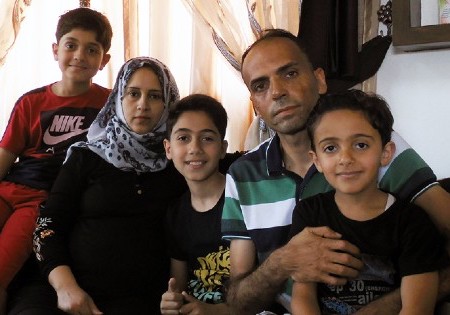
Mohammad Abu Rukbeh and family


DCIP senior field researcher Mohammad Abu Rukbeh and his family, who live in Jabalia refugee camp, Gaza Strip. Courtesy of DCIP/Mohammad Abu Rukbeh

Protecting Palestinian Children in Gaza and the West Bank
Muna Abu Sneineh, Defense for Children International - Palestine (DCIP); Shaina Low, DCIP; and Jennifer Bing, American Friends Service Committee

Join videoconference here

Call in by phone: +1 (669) 900-6833*
Meeting ID: 831 3775 8929 PASSCODE: 637903

Passing the Virtual Bucket

We can't pass the bucket in person, but ICUJP still needs your support. Please give as generously as you can:

• On our donation page. You can set up recurring gifts too!

• Use the Give+ app for iPhone or Android

• Text a gift amount to 323-701-1467

Thank you!

----------

Help Support Families in Need

The need for Immanuel Presbyterian's Food Pantry is greater than ever. Please donate here. Thank you!


*Meeting controls for call-in attendees:
To mute/unmute yourself: *6
To raise hand: *9

The U.S. House of Representatives Foreign Affairs Committee is currently reviewing  HR 2590 - the Palestinian Children and Families Act. The bill aims to protect human rights for Palestinians living under Israeli military occupation and ensure no U.S. taxpayer funds are used by Israel for military detention of Palestinian children, unlawful seizure or destruction of Palestinian property, forced removal of civilians in the West Bank, or further annexation of land in violation of international law.

Muna Abu Sneineh, Defense for Children International - Palestine (DCIP); Shaina Low, DCIP; and Jennifer Bing, American Friends Service Committee will discuss the bill, the current situation in Palestine, how their organizations are responding, and how we at ICUJP can take action.

Muna Abu SneinehMuna Abu Sneineh is a human rights consultant and lawyer committed to help bring justice to oppressed and vulnerable children in Palestine and globally. Muna joined DCIP as Chair of the Board in 2020, having previously served as a board member. She began her legal career focusing on human rights in Palestine and regionally. Her areas of expertise are in child justice, children in conflict with the law, child victims of violence, gender equality, and rights of persons with disabilities. Muna has served as a legal and human rights consultant and trainer with a variety of international and local organizations.

Muna contributed as a legal consultant on the State of Palestine’s report on the implementation of the Convention on the Rights of the Child, Optional Protocol on the Involvement of Children in Armed Conflict and the Convention on the Rights of Persons with Disabilities. Previously, she served as a lawyer and then coordinator of DCIP’s Child Justice Unit. In 2011 and 2014, she ranked first in the International Human Rights Pleadings competition for Lawyers, organized by Al-Quds University and France-based International Institute for Human Rights and Peace. Muna holds a master’s degree in Democracy and Human Rights. She lives in Jerusalem with her husband and their three children.

Shaina LowShaina Low (she/her/hers) is an Advocacy Officer with DCIP. Her experience with organizations in the U.S. and Palestine/Israel has included fundraising, working with children, guest lecturing at high schools and colleges, organizing and leading advocacy tours, and bringing delegations to the region. Her legal research has covered topics including forcible transfer, the international community’s obligations under international humanitarian and human rights law, and the rights of prisoners and children. Shaina holds a BA in political science from Columbia University and a JD from the City University of New York Law School.

Jennifer BingJennifer Bing has worked at AFSC since 1989, serving in various capacities in its Israel-Palestine programs. She directs the AFSC Palestine Activism Program in Chicago and works with colleagues in Palestine and Israel. in her tenure with AFSC, Jennifer has organized hundreds of speaking tours, conferences, workshops, advocacy campaigns, and educational programs about the Middle East.

Schedule:

7:30 - 7:35  Log in and socialize
7:35 - 7:45  Welcome and brief introductions 
7:45 - 7:50  Reflection (5 min. maximum)
7:50 - 9:15  Program and Q&A
9:15 - 9:20  Announcements
9:20 - 9:30  Closing circle and prayer

-----

Start your morning with us!

Reflection: Carolfrances Likins
Facilitator: Veda Veach
Zoom host: Jennifer Lim

* Link to this week's agenda*


** Meetings begin promptly at 7:30 am Pacific. **

-----

Here's how to join the online meeting:

To join by video conference, you'll need to download the Zoom app on your computer or mobile device. Click on the link to join the meeting and then enter the Meeting ID number and passcode. You'll be able to see slides and video, as well as speakers and other attendees.

If you prefer to join by phone, you'll be prompted to enter the Meeting ID number and passcode. You won't be able to see the visuals or attendees, but you can view them on the meeting video recording afterward. 

If you're new to Zoom and would like to use the video option, we recommend you download the app well ahead of time.

ICUJP Friday Forum 07/30/21
Time: 07:30 AM Pacific Time (US and Canada)

Option 1: Join videoconference here
Meeting ID: 831 3775 8929
PASSCODE: 637903

Option 2: Dial in by phone only:
+1 (669) 900-6833 US (California)
Meeting ID: 831 3775 8929
PASSCODE: 637903

(To find a dial-in number closer to you, go here.)

-----

Please note: Our Friday Forums and other events are open to the public. By attending, you consent to having your voice and likeness recorded, photographed, posted on ICUJP's website and social media, and included in ICUJP materials and publications for noncommercial purposes. If you don't want to be photographed or recorded, please let the facilitator know.


UPCOMING EVENTS

SATURDAY, SEPT 11: Save the date! ICUJP 20th Anniversary and George F. Regas Courageous Peacemaker Awards. In-person and online event. 4:00-6:00 pm, All Saints Episcopal Church, Pasadena. Stay tuned for details.

FRIDAY FORUMS

AUG 6: Hiroshima Day - Tsukuru Fors


You are receiving this email because you are a part of the ICUJP Mailing List. You cannot reply to everyone through this email.

If you wish to join the ICUJP discussion list, sign into Google Groups, search for ICUJP, and use the "Ask to join group" button.

Interfaith Communities United for Justice and Peace

To learn more about ICUJP, please visit our website.


Interfaith Communities United for Justice and Peace · 3300 Wilshire Blvd, Los Angeles, CA 90010, United States
This email was sent to communications@icujp.org. To stop receiving emails, click here.
You can also keep up with Interfaith Communities United for Justice and Peace on Twitter or Facebook.

Created with NationBuilder, software for leaders.

Rally for Affordable Housing at Pasadena City Hall on Monday, Aug 2, at 3 pm


Rally to Support Affordable Housing

City Hall Steps Monday, August 2,  2021

3:00 4:00 p.m.

Before the City Council Meeting

PASADENA NEEDS YOU!

Demand that Pasadena’s Updated Housing Element solves our Affordable Housing Crisis

The Housing Element guides the City’s housing policy for the next 8 years

Now is the time to TELL the PASADENA CITY COUNCIL

·      Affordable Housing is a right

·      We need affordable housing for all

Protection for renters

 If you can't attend, please write to the City Council and let them know that you support 

PASADENA AFFORDABLE HOUSING COALITION: All Saints Church, Making Housing and Community Happen, NAACP, League of Women Voters-Pasadena Area, Pasadena For All, POP!, Democrats of Pasadena Foothills, Complete Streets Coalition, Abundant Housing LA

Thursday, July 8, 2021

Big, Bold Affordable Housing Solutions from the Pasadena Affordable Housing Coalition


Dear Mayor Gordo, City Council members and Commissioners,

The State Department of Housing and Community Development provides guidance to cities on revising their Housing Elements, noting that California law requires all cities in California to “adequately plan to meet the housing needs of everyone in the community.”   This broad mandate is too often narrowly interpreted to mean compliance with the minimum standards needed for State certification.

The Pasadena Affordable Housing Coalition, made up of a widely representative group of community and civic organizations, urges the Planning Commission to go beyond demonstrating that Pasadena has the theoretical capacity to meet our city’s Regional Housing Needs Assessment of 9,429 total units.  The dominant theme of the City’s public outreach meetings has been the demand for effective solutions to the affordable housing crisis facing our rent-burdened tenants and unhoused residents.

To that end, the Housing Element must be a plan that goes beyond potentially allowing 5,974 units of affordable housing (to be added in Pasadena over the next eight years) but instead provides a comprehensive approach to achieving that goal.

Tonight thousands of Pasadenans will go sleep worrying about their housing security – and hundreds more will not have a place to sleep at all. It is cold comfort to them to offer a plan that in addresses their needs in concept, but not in reality.   

 The Coalition’s member organizations support a comprehensive set of recommendations based on three key overarching principles to ensure the plan not only meets the minimum standards of State law but most importantly meets the needs of Pasadena’s families, seniors, workers, disabled and low-income renters.  These principles are:

·        Make affordable housing easier and less expensive to build in Pasadena by removing the myriad local barriers that inflate the costs and discourage development of affordable housing. 

·        Provide augmented local funding to help bridge the gap between the cost of providing affordable housing and the current resources available. Pasadena cannot fill the gap on its own, but can ensure that Federal, State, regional, private and non-profit resources can be leveraged to maximize the supply of local affordable housing.

·        Provide housing security to Pasadena’s rent-burdened tenants, recognizing the dire crisis facing them now as they cope with rising rents, inadequate legal protections against evictions and harassment and often substandard living conditions that go unreported for fear of retaliation.

Making affordable housing easier and less expensive to build in Pasadena starts with common sense policies that include enabling construction of deed-restricted affordable housing by right on congregational land and in commercial zones; removing parking minimums citywide; incentivizing the building of accessory dwelling units (ADUs); and streamlining the cumbersome processes that impede the development of affordable housing as well as permanent supportive housing for unhoused residents. 

Consideration of an affordable housing overlay on congregational land has been needlessly delayed and if not pursued immediately should be among the first priorities for implementation in the Housing Element. Given the changing face of retail, development “by right” of adaptive reuse with affordable housing should also be a critical priority.

ADUs can provide “elegant density” that not only increase the housing supply overall, but help low-income owners and young families afford their mortgages. Finally, Pasadena should recognize that tortuous entitlement processes don’t produce equitable outcomes. Pasadena should set high standards -- and grant permits to those who comply.

Providing augmented local funding to help bridge the gap between the cost of providing affordable housing and the current resources available is the only way to adequately leverage the resources from Federal, State, regional, private and non-profit resources. Using redevelopment set aside for affordable housing, Pasadena compiled an exemplary record of supporting local affordable housing.

Since its abolition in 2011, the only local stream of funding for affordable housing has come from housing developers who’ve chosen not to provide onsite units to meet their inclusionary responsibilities. This is grossly inadequate to the need.  Voters in other jurisdictions including Los Angeles, Culver City and Santa Monica have approved local taxes or bonds.

As Pasadena considers meeting its overall fiscal needs, affordable housing should be a paramount goal to maintain our character as an inclusive and diverse community dedicated to safe and decent housing for all our residents.

Enhancing housing security for Pasadena’s rent-burdened tenants is necessary because renters’ lives can’t wait for the city to meet the pent-up demand for additional affordable housing options. Just as developers often require grants and below market financing to make their projects viable, low and very low income tenants often require subsidies and protections against undue escalations in housing costs to make their rents affordable. No one knows whether the State’s program for forestalling mass evictions after the expiration of the present eviction moratorium will be adequate.

Even if mass displacement does not immediately occur, over the past two decades thousands of long-term residents, many of them multi-generational Pasadenans, have been involuntarily displaced out of the city. This tragedy has fallen most heavily on people of color, particularly the historic Black community in Pasadena, which the 2010 Census showed had been reduced by 24% in just ten years. Given the drastic escalation in rents and home values during the last decade, a similar or greater decline is to be expected upon the release of the 2020 Census figures.  

To stem the tide of displacement, the city must fashion remedies to meet not only its RHNA goals - as important as they are - but the affordable housing concerns of its existing residents-over 60% of whom are renters. 

Our coalition urges the City to recognize the dire crisis of its existing residents with means adequate to the challenge, adopting a comprehensive set of tenant protections including rent control, just cause eviction rights, adequate legal representation for low-income tenants and a citywide rent registry.  

If any of these policies are not included in the Housing Element, the City must propose adequate alternatives for providing housing security to ensure Pasadenans are not forced out of their homes, their neighborhoods, their children’s schools and in some cases out onto the streets.

These three principles and the policies we’ve enumerated in this letter represent a framework for development of a comprehensive Housing Element. Our Coalition has extensively discussed a more detailed set of policies and programs which are all vital to a balanced and realistic plan for housing affordability in Pasadena. We ask the Commission members and City staff to give thoughtful consideration to each and every one of our recommendations for inclusion in the Housing Element.

We appreciate this opportunity to provide the views of hundreds of informed and active local community members who insist their City “adequately plan to meet the needs of everyone in the community.”

Respectfully submitted,

The Pasadena Affordable Housing Coalition


Wednesday, July 7, 2021

ICUJP Friday Forum for July 9: Puerto Rico: Labor Crisis and Femicide Nicole Hernandez and Lawrence Reyes


Please join us online

ICUJP Friday Forum
July 9, 7:30-9:30 am Pacific

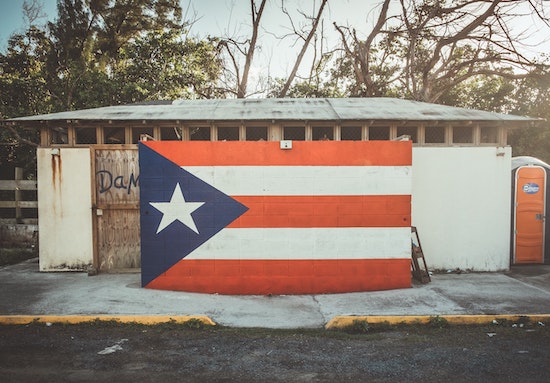
Puerto Rican flag

Photo bJo Kassis from Pexels

Puerto Rico: Labor Crisis and Femicide

Nicole Hernandez and Lawrence Reyes

Join videoconference here

Call in by phone: +1 (669) 900-6833*
Meeting ID: 823 5873 1422 PASSCODE: 037133

Backlash to Justice, Part II

Watch the video here

-----
Passing the Virtual Bucket

We can't pass the bucket in person, but ICUJP still needs your support. Please give as generously as you can:

• On our donation page. You can set up recurring gifts too!
• Use the Give+ app for iPhone or Android
• Text a gift amount to 323-701-1467

Thank you!

----------

Help Support Families in Need

The need for Immanuel Presbyterian's Food Pantry is greater than ever. Please donate here. Thank you!


*Meeting controls for call-in attendees:
To mute/unmute yourself: *6
To raise hand: *9

Join us for a look at two social issues facing Puerto Rico today. Nicole Hernandez will give an update on the feminist struggles in the commonwealth. In 2019, a report from Kilometro Cero and Proyecto Matria found that one or more femicides take place each week in Puerto Rico. On January 24, 2021, Governor Pedro Pierluisi responded to feminists' demands and declared a state of emergency to address violence against women. How was this achieved? How is it playing out? And what are current issues for feminist organizers?

Lawrence Reyes will discuss the situation that has labor unions supporting workers from the Electric Power Authority (PREPA) facing off against Governor Pierluisi and the commonwealth’s Financial Oversight and Management Board. Unions are threatening a paralyzing strike if the government doesn’t repeal its contract with LUMA Energy, a private company. “We are warning the attorney for the Financial Oversight and Management Board, Pedro Pierluisi, that there will be no peace in Puerto Rico if the contract is not repealed and they listen to the people who demand, not only a public and more efficient PREPA, but also one free of fossil fuels,” said a union organizer. 

Nicole HernandezNicole Hernandez (they/them) leads Puerto Ricans in Action (PRiA) in Los Angeles. PRiA was founded in the summer of 2016 to protest against PROMESA - the Puerto Rico Oversight, Management, and Economic Stability Act (H.R.5278) passed by the U.S. House of Representatives. PRIA has continued to hold protests, marches, educational and disaster recovery campaigns ever since. Most recently, the group embarked on an archiving project titled "Calle de La Resistencia Diaspora Archive." PRiA's mission is to be the central organizer for Puerto Ricans across Los Angeles County.
Lawrence ReyesLawrence Reyes is a longtime human rights and media democracy activist. A member of the Young Lords Party and Boricua, he overcame drug use, incarceration, and being houseless on the streets of Brooklyn. Lawrence earned a degree in human behavior from Brooklyn College and in substance abuse counseling from UCLA Extension. Now a Senior Community Mental Health Worker for LA County, he is obtaining a master’s degree in psychology with a concentration in trauma at Antioch University. Through his work in the Puerto Rican Alliance, he has long been committed to coalition building, particularly among Black, Brown, Native, and other communities of color. Lawrence currently represents KPFK as a Local Station Board member and serves as a Director Trustee with the Pacifica Foundation. In addition, he is a Board member for WERC, an organization offering employment training to formerly incarcerated people. As a father, he is deeply engaged in the upbringing and education of his son and other youth, particularly in addressing mental health challenges and services within the LA Unified School District.

Schedule:

7:30 - 7:35  Log in and socialize
7:35 - 7:45  Welcome and brief introductions 
7:45 - 7:50  Reflection (5 min. maximum)
7:50 - 9:15  Program and Q&A
9:15 - 9:20  Announcements
9:20 - 9:30  Closing circle and prayer

-----

Start your morning with us!

Reflection: Rose Leibowitz
Facilitator: Fernando Fernando
Zoom host: Carolfrances Likins

* Link to this week's agenda*
 
** Meetings begin promptly at 7:30 am Pacific. **

-----

Here's how to join the online meeting:

To join by video conference, you'll need to download the Zoom app on your computer or mobile device. Click on the link to join the meeting and then enter the Meeting ID number and passcode. You'll be able to see slides and video, as well as speakers and other attendees.

If you prefer to join by phone, you'll be prompted to enter the Meeting ID number and passcode. You won't be able to see the visuals or attendees, but you can view them on the meeting video recording afterward. 

If you're new to Zoom and would like to use the video option, we recommend you download the app well ahead of time.

ICUJP Friday Forum 07/09/21
Time: 07:30 AM Pacific Time (US and Canada)

Option 1: Join videoconference here

Meeting ID: 823 5873 1422
PASSCODE: 037133

Option 2: Dial in by phone only:
+1 (669) 900-6833 US (California)
Meeting ID: 823 5873 1422
PASSCODE: 037133

(To find a dial-in number closer to you, go here.)

-----

Please note: Our Friday Forums and other events are open to the public. By attending, you consent to having your voice and likeness recorded, photographed, posted on ICUJP's website and social media, and included in ICUJP materials and publications for noncommercial purposes. If you don't want to be photographed or recorded, please let the facilitator know.


UPCOMING EVENTS

SATURDAY, SEPT 11: Save the date! ICUJP 20th Anniversary and George F. Regas Courageous Peacemaker Awards. In-person and online event. 4:00-6:00 pm, All Saints Episcopal Church, Pasadena. Stay tuned for details.

FRIDAY FORUMS

JULY 16: TBD
ICUJP Board members: The July meeting will take place following the 7/16 Forum.

JULY 23: Christians for the Abolition of Prisons - Hannah Bowman


You are receiving this email because you are a part of the ICUJP Mailing List. You cannot reply to everyone through this email.

If you wish to join the ICUJP discussion list, sign into Google Groups, search for ICUJP, and use the "Ask to join group" button.

Interfaith Communities United for Justice and Peace
To learn more about ICUJP, please visit our website.
 

Interfaith Communities United for Justice and Peace · 3300 Wilshire Blvd, Los Angeles, CA 90010, United States
This email was sent to icujp-discuss-list@googlegroups.com. To stop receiving emails, click here.
You can also keep up with Interfaith Communities United for Justice and Peace on Twitter or Facebook.

Created with NationBuilder, software for leaders.


--

Thursday, July 1, 2021

Op-Ed: Founding Fathers as Founding Debtors: How some of them used slaves as collateral


Among the presidents honored on Mt. Rushmore are George Washington, who owned slaves, and Thomas Jefferson, who used his slaves as collateral to secure debt. See Mt Rushmore from a Native American perspective: https://www.history.com/news/mount-rushmore-native-american-protests

(Associated Press)

By CLYDE W. FORD

JULY 1, 2021 3:05 AM PT

Americans remain largely unaware that many of the famous Founding Fathers were deeply in debt. Some of them, including Thomas Jefferson, attempted to forestall foreclosure by using their slaves as collateral. Using human beings to back debt was refined in the years following 1776 — and it helped jump-start our American financial system.

Slave-backed debt was a depravity that treated Black men and women as fodder whose only worth was the wealth they generated for others. In honor of Independence Day, let’s look at the founders as debtors, especially at a time when so many Americans are in debt from a pandemic that has left them unable to pay their rent, mortgage and credit card bills.

Thomas Jefferson died July 4, 1826, nearly $2 million in debt in today’s dollars. Mount Vernon, George Washington’s tobacco-based estate, failed to keep Washington out of debt, so he switched to wheat in the 1760s, though his debt lingered throughout the Revolutionary War and his presidency.

How the founders got into debt was simple. Each year they sold their tobacco to European merchants (mainly British), primarily in exchange for the goods that supported their lavish lifestyles. As tobacco prices fell, but their desire for material comforts remained, they paid for that lifestyle on credit extended by many of the same merchants.

Before the Revolutionary War, economic conditions in Europe squeezed British merchants, who in turn squeezed American planters for debt repayment. This pushed some American planters into financial collapse and others, like Jefferson and Washington, to the brink of financial ruin. Some slaveholding planters even complained of enslavement to British creditors.

The patricians of July 4 bristled at their independence being clipped by British creditors — and that independence being so deeply predicated on tobacco, their main way of raising the money owed to those creditors. Tobacco was demanding to grow, and without slaves to raise their crops, Jefferson, Washington and other planters would have been far too busy farming to have had the leisure to contemplate the lofty ideals of liberty.

In this way, liberty was tied directly to slavery. Although it would be incorrect to say that the founders went to war with Britain just to get out from under debt, their mounting debt predisposed them to be open to the idea of separating from Britain, resulting in the Declaration of Independence and the Revolutionary War.

In the years following America’s victory in that war, deep debt continued to hang over Jefferson. He sought repayment plans with his European creditors and used his slaves, whom he listed by name, as collateral against that repayment. In this regard, Jefferson was at the leading edge of a blossoming trend. Although tobacco eventually yielded to cotton, an entire financial services industry emerged from slaved-backed loans before the Civil War — through what one economic historian called an “orgy of bank-creation.”

Citizens’ Bank and Canal Bank of Louisiana, which both ultimately merged into J.P. Morgan, accepted approximately 13,000 slaves as collateral for loans between 1831 and 1865. When some of those loans defaulted, the bank ended up owning approximately 1,300 slaves. The Bank of Charleston, which eventually became part of Wells Fargo, also accepted slaves as collateral on loans. So did the Commonwealth Bank of Kentucky, which still exists today.

Planters opened new Southern banks. They drew up lists of slaves as collateral, then had those banks issue loans to members to buy more land and more slaves. Capital for these loans was raised by selling bonds to investors worldwide, in London, New York, Amsterdam and Paris — many places where slavery was illegal.

But investors didn’t own individual slaves, they owned bonds backed by the slaves’ value. Of course, then insurance was needed on the slaves who backed the bonds that investors purchased to provide loans for planters to buy more land and slaves. Aetna, AIG, New York Life and many others stepped up to provide that insurance.

“The infant American financial industry,” wrote historians Edward E. Baptist and Louis Hyman, “nourished itself on profits taken from financing slave traders, cotton brokers and underwriting slave-backed bonds.” Black Americans, and their descendants, never recouped anything from a financial system built on their bodies.

Today, many white Americans claim no hand in slavery or the brutalization of Black Americans. Their forebears immigrated to this country well after slavery ended, they say, and they worked hard, accruing no privilege or wealth. Yet, anyone who’s ever bought a home on a mortgage, a car on installment, invested in the stock market, bought insurance or opened a savings account has enjoyed systemic privilege.

The institutions used in these transactions were built on the bodies of Black men and women who never accrued anything from the enormous wealth they generated. Family wealth is accrued over many generations, and most Black families were never afforded an opportunity to build it, even though they helped build wealth for many others. This makes a strong case for reparations.

Before that can happen — and in the name of the Founding Debtors — the federal government should at least extend the eviction moratorium and provide debt relief for the millions behind on rent and mortgage until well after the pandemic is over and a full recovery is underway.

Clyde W. Ford is the author of the forthcoming “Of Blood and Sweat: Black Lives, and the Making of White Power and Wealth.” He is a contributing writer to Opinion.