Please join us online
ICUJP Friday Forum
November 17th, 7:30-9:30 am PacificHow can we get creative in the Israel/Palestine conflict?
CLICK BELOW TO JOIN ZOOM:Call in by phone: Meeting ID: 827 8059 6985PASSCODE: 378677*Meeting controls for call-in attendees:To mute/unmute yourself: *6To raise hand: *9Event Description: Understandably, activist responses to the new outbreak of Israel/Palestinian fighting is moralistic, preoccupied with "who's right and who's wrong." We'll take a deeper dive, trying to initiate a conversation about how adoption of nonviolent means of fighting it out might make a difference to the outcome. The point of the discussion will be to provoke creativity in the midst of a moralistic debate. One dimension of the speaker's thinking is featured on WagingNonviolence.org.
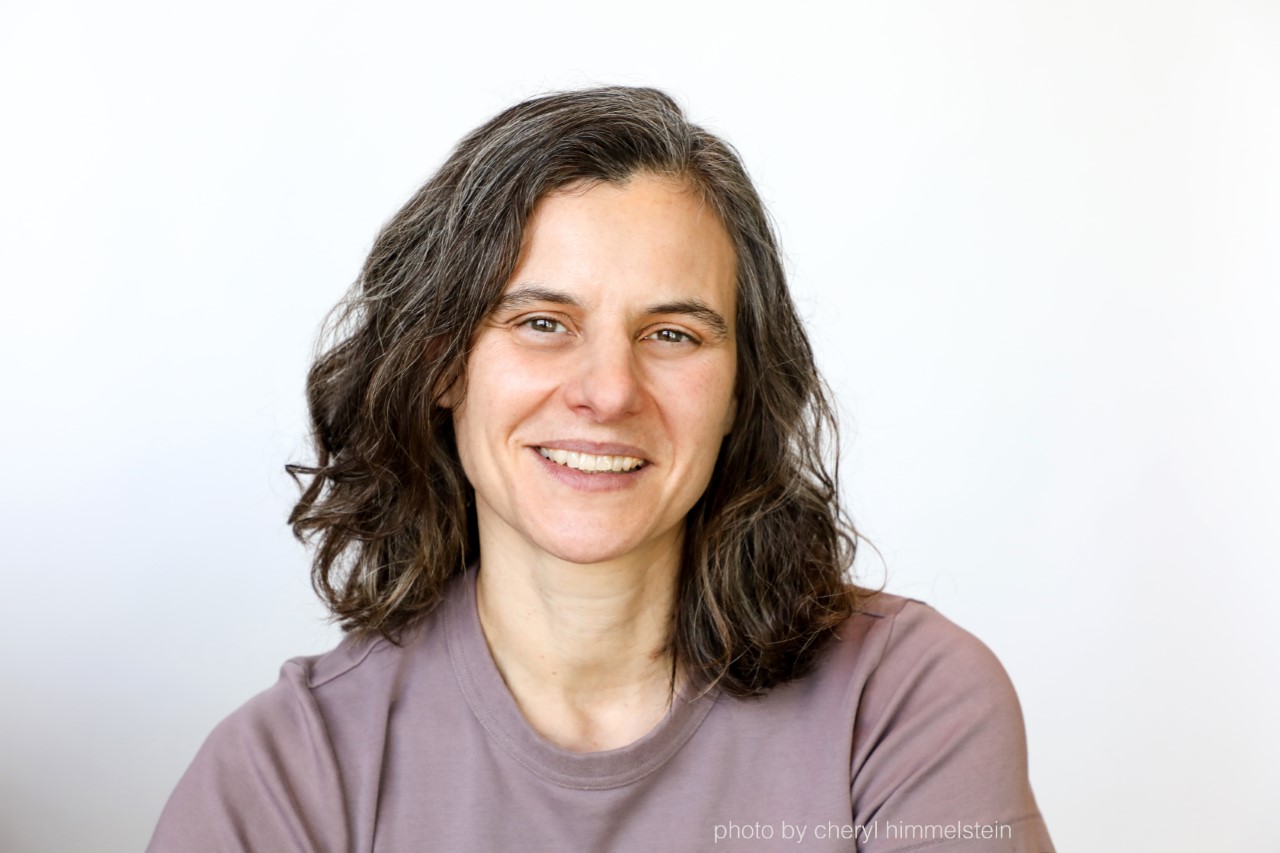
Join the conversation with our speaker:
Born into a white working class family in a small town in rural Pennsylvania, George Lakey was first arrested in the civil rights movement and risked arrest recently for climate justice as an 85-year old great-grandfather. He’s led social change projects on neighborhood, city, state, national, and international levels. He married a Norwegian woman, played cocktail piano in a hotel, taught at the University of Pennsylvania and Swarthmore College, co-parented a majority Black family, came out publicly as gay, and published ten books on how to make change. He led over 1500 social change workshops on five continents, for Buddhist monks, Russian LGBTQ activists, South African National Congress members, and Northern U.S. students bound for 1964 Mississippi Summer.
A Quaker, he has been named Peace Educator of the Year and given the Paul Robeson Social Justice Award and the Martin Luther King Peace Award. His eleventh book, a memoir, is Dancing with History: A Life for Peace and Justice, from Seven Stories Press.
“A civil rights legend” – The Guardian
Learn More/Here's how YOU can help:
7:30 - 7:35 Log in and socialize
7:35 - 7:45 Welcome and introductions
7:45 - 7:50 Reflection (5 min. maximum)
7:50 - 9:15 Program and Q&A
9:15 - 9:20 Announcements
9:20 - 9:30 Closing circle and prayerStart your morning with us!
Facilitator: Rose Leibowitz
Reflector: Maggie Hutchison** Meetings begin promptly at 7:30 am Pacific. **-----Here's how to join the online meeting:
To join by video conference, you'll need to download the Zoom app on your computer or mobile device. Click on the link to join the meeting and then enter the Meeting ID number and passcode. You'll be able to see slides and video, as well as speakers and other attendees.
If you prefer to join by phone, you'll be prompted to enter the Meeting ID number and passcode. You won't be able to see the visuals or attendees, but you can view them on the meeting video recording afterward.
If you're new to Zoom and would like to use the video option, we recommend you download the app well ahead of time.
ICUJP Friday Forum 11/17/23
Time: 07:30 AM Pacific Time (US and Canada)Option 1: Join video conference
https://us02web.zoom.us/j/82780596985Meeting ID: 827 8059 6985
PASSCODE: 378677Option 2: Dial in by phone only:
+1 669 900 6833 US (California)
Meeting ID: 827 8059 6985
PASSCODE: 378677*Meeting controls for call-in attendees:
To mute/unmute yourself: *6
To raise hand: *9(To find a dial-in number closer to you, go here.)
-----
Please note: Our Friday Forums and other events are open to the public. By attending, you consent to having your voice and likeness recorded, photographed, posted on ICUJP's website and social media, and included in ICUJP materials and publications for noncommercial purposes. If you don't want to be photographed or recorded, please let the facilitator know.
ICUJP has been featured on a few different media venues over the last few weeks - ICUJP Chairperson Steve Rohde was interviewed on KPFK's long-running program "The Lawyers Guild", hosted by Jim Lafferty and Maria Hall. The program also featured legal scholar and ICUJP supporter Marjorie Cohn.
You can listen to the program here:
Steve was also interviewed by Jason DeRose of NPR on the difficulty in making definitive statements about the Israel/Hamas tragedies that do not get misinterpreted by either side.
He was interviewed along with Tahil Sharma, an interfaith minister with the Episcopal Diocese of Los Angeles, as well as Phoebe Milliken of Hartford International University, and you can listen to that segment here._________________________________________
22nd Anniversary of ICUJP: 22 years of working for Justice and Peace
Twenty-two years ago, Rev. George Regas of All-Saints Episcopal Church in Pasadena reached out to clergy, community leaders, and laypeople to come together to seek an alternative to the fear-mongering and vengefulness sweeping much of our nation in the wake of September 11. The message that they wanted to convey was coherent and powerful: “Religious Communities Must Stop Blessing War and Violence.” On that day, Interfaith Communities United for Justice and Peace was born.
These past 22 years have been a journey for ICUJP - five Presidents, four California Governors, and numerous crises and issues that would shake the resolve of even the most devout and dedicated of activists. But through it all, we go forward in our mission to be the voice for "the least of these", and our determination to create the change we want to see in the world.
On Sunday, September 10th, 2023, ICUJP honored Rev. George Regas's life and legacy, and recognized deserving organizations with the 2023 George F. Regas Courageous Peacemaker Award. As our theme was "Housing is a Human Right", we were glad to shine a light on the work of Making Housing and Community Happen, All-Saints Church Safe Haven Bridge to Housing, the Office of Mayor Karen Bass of Los Angeles, and the Jerusalem Legal Aid and Human Rights Center.
Thank you for your part in keeping the vision of George F. Regas alive as we continue creating a place to gather, organize, pray, and act together united by the fundamental principle that Religious Communities Must Stop Blessing War and Violence.
Please consider helping Interfaith Communities United for Justice and Peace in its mission. ICUJP operates as a largely volunteer organization with a small part-time paid staff. We have survived for over 20 years through the generosity of individuals and organizations like you. Like so many other organizations, our ability to raise donations has been hampered during the COVID pandemic.

Thursday, November 16, 2023
How can we get creative in the Israel/Palestine conflict? Talk by George Lakey , Quaker peace activist, at ICUJP



Friday, November 3, 2023
A Quaker Perspective on Mysticism and Activism For Spirit Seekers
I shared this with a group of Methodists who wanted to know more about how the Quaker practice of contemplative worship and mysticism is linked to social activism/prophetic witness.
What Do We Mean by Mysticism
and Prophetic Witness?
Mysticism is the belief that people can directly experience God
or true reality, rather than through books, ritual or other people. People who
practice this are called mystics. Mystics usually experience this direct
connection through contemplation, or silent worship.
The prophet is distinguished first by a face-to-face relationship with YHWH. The
prophet then serves as a witness of YHWH and ministers by speaking and
actuating the word of God. In an intimate encounter, a prophet hears from God,
receives a word to be shared with God's people, then acts.
What do prophets and mystics have in common? How are they different?
Have you ever had a direct experience of the Divine that led you to take
action?
Quakers believe that everyone can have a direct experience of God
through the practice of contemplative worship. Some Quakers feel called to
prophetic witness either individually or collectively as a result of waiting
and listening for the Word of the Lord. For this reason, Quaker worship is
sometimes called “listening” or “expectant” worship.
When we sit in contemplative silence during times of pain and experience
the healing power of Spirit, we can become more compassionate listeners. This
led the Quaker peace activist/mystic Gene Hoffman to develop a technique called
“Compassionate Listening.” She brought together Israelis and Palestinians and
taught them how to listen to each other’s stories nonjudgmentally and
compassionately. This has proven to be a powerful tool for reconciliation. Her
work is being carried on by Leah Green through the Compassionate Listening
Project.
After 9/11, Gene Hoffman’s insights had a profound effect on me:
“Some time ago, I recognized that terrorists were people who had
grievances, who thought their grievances would never be heard, and certainly
never addressed. Later, I saw that all parties to every conflict were wounded
and that at the heart of every conflict was an unhealed wound. I began to
search for ways to heal these violence-causing wounds.” [1]
In addition to listening compassionately, Quakers also see themselves as
“speaking truth to power” (a phrase coined by the Quaker activist Bayard
Rustin), like the prophets of old.
“Like the Hebrew and Christian prophets whose lives [early Quakers] used
a models, they experienced God as a living, energizing power that spurred them
to confront corrupt institutions and to form communities of believers” (Pacific
Yearly Meeting Faith and Practice, 2001,
p. 3).
Have you ever felt Spirit or God leading you to take some action to
correct or protest an injustice? Describe what this was like for you. What did
you do?
Quakers believe that we can have a mystical/prophetic experience
collectively when we sit in contemplative silence together, seeking to hear and
do the will of God. This was also the belief of early Christians, as Rohr
explains:
Richard Rohr on
Prophetic Witness
Christianity has given little energy to prophecy, which Paul identifies
as the second most important charism for building the church (1 Corinthians
12:28; Ephesians 4:11). Too often, when Christians talk about prophecy, we
think prophets make predictions about the future. In fact, prophets say exactly
the opposite! They insist the future is highly contingent on the now. They
always announce to the people of Israel that they have to make a decision
now. You can go this way and the outcome of events will undo you or you can
return to God, to love, and to the covenant. That’s not predicting the future as much as it’s
naming the now, the way reality works. The prophet opens up human freedom by
daring to tell the people of Israel that they can change history by changing
themselves. That’s extraordinary, and it’s just as true for us today.
The prophets ultimately reveal a God who is “the God of the Sufferers”
in the words of Jewish philosopher Martin Buber (1878–1965. I’d like to put it
this way: it is not that we go out preaching hard and difficult messages, and
then people mistreat and marginalize us for being such prophets (although that
might happen). Rather, when we go to the stories of the prophets and of Jesus
himself, we discover the biblical pattern is just the opposite! When we find
ourselves wounded and marginalized, and we allow that suffering to teach us, we
can become prophets. When we repeatedly experience the faithfulness, the mercy,
and the forgiveness of God, then our prophetic voice emerges. That’s the
training school. That’s where we learn how to speak the truth.
The prophets were always these wonderful people who went to wounded
places. They went to where the suffering was, to the people who were excluded
from the system. They saw through the idolatries at the center of the system
because those who are excluded from the system always reveal the operating
beliefs of that system. Speaking the truth for the sake of healing and
wholeness is then prophetic because the “powers that be” that benefit from the
system cannot tolerate certain revelations. They cannot tolerate the truths
that the marginalized—the broken, the wounded, and the homeless—always reveal.
A favorite Bible passage for Quakers:
The story of Elijah from
Kings 19:9-13
9 And the word of the LORD came to him: “What are you doing here,
Elijah?” Elijah replied, “I have been very zealous for the LORD God Almighty. The
Israelites have rejected your covenant, torn down your altars, and put your
prophets to death with the sword. I am the only one left, and now they are
trying to kill me too.” 11 The
LORD said, “Go out and stand on the mountain in the presence of the LORD, for
the LORD is about to pass by.” Then a great and powerful wind tore the
mountains apart and shattered the rocks before the LORD, but the LORD was not
in the wind. After the wind there was an earthquake, but the LORD was not in
the earthquake. 12 After
the earthquake came a fire, but the LORD was not in the fire. And after the
fire came a gentle whisper. 13 When
Elijah heard it, he pulled his cloak over his face and went out and stood at
the mouth of the cave. Then a voice said to him, “What are you doing here,
Elijah?”
Why did Elijah run away? Was he simply afraid? Did he lose faith in God?
Have you ever experienced times when you needed to withdraw from a
difficult situation to find clarity? During this time of withdrawal, did you seek God’s guidance and experience a “gentle
whisper” or “still small voice” giving you wisdom on how to deal with this
situation?
Elijah is asked the same question twice by God: “What are you doing
here?” How do you think Elijah’s mountain-top experience changed the way he
responds to this question?
[1]
See Compassionate Listening and Other Writings by Gene Knudsen Hoffman:
Quaker Peacemaker and Mystic, 2002, ed. by Anthony Manousos.
The Shoulder to Shoulder Campaign: A Multifaith Approach to Countering Anti-Muslim Discrimination
7:30 - 7:35 Log in and socialize Start your morning with us! ** Meetings begin promptly at 7:30 am Pacific. ** ----- Here's how to join the online meeting:To join by video conference, you'll need to download the Zoom app on your computer or mobile device. Click on the link to join the meeting and then enter the Meeting ID number and passcode. You'll be able to see slides and video, as well as speakers and other attendees. If you prefer to join by phone, you'll be prompted to enter the Meeting ID number and passcode. You won't be able to see the visuals or attendees, but you can view them on the meeting video recording afterward. If you're new to Zoom and would like to use the video option, we recommend you download the app well ahead of time. ICUJP Friday Forum 11/03/23 Option 1: Join video conference Meeting ID: 857 9592 9427 Option 2: Dial in by phone only: *Meeting controls for call-in attendees: |



Monday, October 30, 2023
How to Make Sure the Bedbugs Don't Bite (and a poem about Bed bugs)

Having recovered from our month-long bed bug infestation, I'm finding others who went though a similar experience of feeling traumatized. When you have bedbugs, you not only suffer from sleepless nights, you also become socially isolated. You can't have people in your home. You can't visit other people (lest you bring bedbugs with you). It's deeply disturbing psychologically as well as physically unpleasant, especially if you are hyper allergic like me. Thirty percent of people aren't affected by bed bugs (my wife is one of these), but they can carry bed bugs to other people's homes since bed bugs like to hitchhike on clothes, luggage and handbags.
So here are some lessons learned:
1) When you discover you have bedbugs, deal with the problem immediately and don't try to get rid of them yourself. You'll probably make it worse. Hire a professional asap, preferably one with excellent credentials and recommendations who can provide all three types of service: chemical treatment, heat treatment and fumigation. We highly recommend a company called Isotech Pest Management that provided a bed-bug sniffing canine as well as excellent advice and service.
2) Chemical and heat treatment are not infallible, no matter what your exterminator says. Both require that you remove stuff from the room being treated. The trouble is bedbugs may be hiding in these items, so when you return them, the bed bugs return. However, if your infestation is limited, these treatments may work.
3) The only infallible treatment is fumigation. The fumigants kills all bedbugs and eggs (and also termites). Fumigation means tenting your home. It costs a small fortune but produces peace of mind.
This week Jill and I went on a date and had veggie burgers and fries in Old Pasadena, and compose this "Little Bad Bed Bug Saga." It was good to be able to look back and laugh. We are finally beginning to heal from our bed bug nightmare.
"The Saga of the Little Bad Bed Bugs"
The first night after returning from Greece
We hoped to spend time sleeping in peace
But bedbugs invaded while we were away
Their message was clear: we’re here to stay!
They gave sweet Anthony 40 plus bites
As well as a month of restless nights.
These bugs for some reason disliked Jill’s taste
So she worked super hard to clean up our place.
When bed bugs bite, you can’t have a good night:
Going to bed makes you very uptight.
So we hired an exterminator who promised to kill
These irksome pests who hide where they will.
We were told to take everything from our humble abode
Wash our clothes and our blankets, load by load by load……
Bedbugs expire when the heat is too high.
So we put some stuff in the dryer to fry
Those bad little bugs ‘til they finally die.
In black plastic bags we put other stuff
Hoping the sun's rays would be enough.
But the days were too chilly so this work was in vain.
Finding stuff later was really a pain!
Jill was exhausted past reason or rhyme
Anthony was the canary in the coal mine.
With daily bites he’d let us know
Those bedbugs had no plans to go.
Weary and anxious and living in fear,
We never knew if the bedbugs were near.
So we hired a beagle with an amazing nose
That knows 10,000 times more than a human nose knows!
Rocky could tell where the bedbugs were hiding
and even could sniff where their eggs were abiding.
We learned that our efforts were on the wrong track.
We needed to try a different tack.
We learned from Isotech that fumigation
Was the only cure for our grim situation.
To make room for the tent, we had to clear
Around the perimeter front and rear.
So we hired Walter, a human machine
Who worked harder than anyone we’d ever seen
He gathered up 35 bags of yard waste.
It cost us a bundle to clean up our place!
Then our water heater went on the fritz.
We bought needed tires! We were having fits!
For four nights we lived in an Airbnb,
And boarded our cats in a place of safety,
while the fumigant wiped out our bug colony.
We spent a small fortune to be bed bug free
And it seemed to take an eternity.
After fumigation, we spent many days
Unpacking our bags in a kind of a daze.
It feels good to have our old lives back
But our bodies take time to learn to relax.
On a happy note our long saga ends:
We can finally hang out in our home with our friends!
Free at last! Free at last! Free of bed bugs at last!
Celebrating with friends will be such a blast!
Sunday, October 29, 2023
Celebrate Jill's 70th Birthday with Your Support!
|

|
|
Friday, October 27, 2023
The Quaker witch trial and the socio-political context of witch hunts

With Hallowe'en just around the corner, I'd like to reflect on the socio-political context of witches and witch hunts. I'd like to start my reflection on witch hunts
with a true story about the only Quaker witchcraft trial known to have
occurred. The year was 1684, and the name of the woman accused of witchcraft
was Margaret Mattson. Margaret and her husband arrived in what is today called
Pennsylvania before William Penn, and they were Swedish, and along with their
neighbors, made up the first group of immigrants to settle along the lower
Delaware River. They soon would be displaced by the ever more numerous English
settlers who followed Penn. Their being “foreigners” was probably a significant
cause of this accusation.
Margaret’s neighbors accused her of being a witch and she
was brought before William Penn who served as magistrate. Penn didn’t believe
in witches, but there was a law against witchcraft in England and he was legally
required to question her, so he asked: “Do you fly on a broomstick?” She didn’t
understand his question so she said, “Yes.” Penn responded, “That isn’t a
crime. Case dismissed.”
This story illustrates how Quakers did not buy into the
myth that women who are different are somehow evil. Perhaps that’s why so many
powerful women leaders have emerged from the Quaker movement.
Historically, witch hunts have been a way for the
patriarchy to target women who are “different” and challenge the norms.
Historian Christina Larner estimates that about 80 percent of those
accused of witchcraft in the European witch hunts of the 16th and 17th
centuries were women. At the same time, the witch hunters were overwhelmingly
male.
According to Erin Cassese,
McCarthy’s anti-communist witch hunts also tended to target women. Women were
overrepresented among defendants in federal loyalty cases, and agencies that
employed a disproportionately large share of women were often singled out for
close scrutiny. Historian Landon Storrs notes that evidence presented against
female defendants took on a distinctively gendered tone. For example, keeping
one’s maiden name, “needlessly” holding a high-paying job while married, and
having a “dominant personality” were all grounds for suspicion of communist
sympathizing, ostensibly because communists eschewed traditional gender roles.
Today the term “witch hunt”
has renewed cultural and political resonance, largely because it’s one of
President Trump’s preferred strategies for deflecting criticism and mobilizing
his base. Since assuming office, Trump has tweeted some variant of the phrase
“WITCH HUNT!” innumerable times.
As so common in Trump world, Trump inverts the
conventional usage and casts himself as the victim. Unlike in the past, the
term “witch hunt” is often invoked defensively by men in positions of power and
authority. Recent events show that men with political and economic power can
often rely on the idea of witch hunts to work for them, not against them. The
witch hunt still uses institutional authority to enforce traditional gender
norms and power relations.
I think that Hallowe’en is a
good time to unmask the ugly face of patriarchy which has persecuted women throughout
history for being different, for defying gender norms, and for challenging
accepted beliefs. Let’s not allow these perpetrators of violence against women
to portray themselves as the victims.
Thursday, October 26, 2023
Building Housing on Faith Lands: How Congregations Can Take Action for Housing in CA: Friday Forum
7:30 - 7:35 Log in and socialize Start your morning with us! ** Meetings begin promptly at 7:30 am Pacific. ** ----- Here's how to join the online meeting:To join by video conference, you'll need to download the Zoom app on your computer or mobile device. Click on the link to join the meeting and then enter the Meeting ID number and passcode. You'll be able to see slides and video, as well as speakers and other attendees. If you prefer to join by phone, you'll be prompted to enter the Meeting ID number and passcode. You won't be able to see the visuals or attendees, but you can view them on the meeting video recording afterward. If you're new to Zoom and would like to use the video option, we recommend you download the app well ahead of time. ICUJP Friday Forum 10/27/23 Option 1: Join video conference Meeting ID: 845 1972 6689 Option 2: Dial in by phone only: *Meeting controls for call-in attendees: |